Showing posts with label articles. Show all posts

Monday, September 8, 2014


Bones.


Bones. I like bones. I like big bones. I like small bones. I like medium bones. I like long bones. I like short bones. I like old bones. I like young bones. I like misshapen bones. I really like broken bones. I like bones sticking out of skin. I like bones about to stick out of the skin. I like all sorts of bones. I like them. I like bones.

Sometimes bones are broken. I like to fix bones. Sometimes I break bones to fix bones. Sometimes I put screws in bones. Sometimes I put plates on bones. Sometimes I put wire around bones. Bones. I like to take broken bones and make them straight. Unless it is not a straight bone. Then I do not like to make it a straight bone. 

The lungs confuses me. The heart confuses me. Kidneys confuse me. The pancreas confuses me. Bones do not confuse me. Unless it is the skull. That confuses me. Teeth confuse me. They are bones. I do not like them as much. Ancef is good. I like when anesthesia gives it. Sometimes gentamycin is good too. Not as good as bones. I like bones. 

If you consult me about a deep cut, I will ask if there are broken bones. If you consult me about a crush injury, I will ask if there are broken bones. If you consult me about an infection, I will ask if there are broken bones. If you did not get xrays, I will get them to look at the bones. 

I like muscles too. Sometimes I cut muscles to get to bones. I do not like nerves. They are not bones. They get in the way of bones. 

After I finished my medical school, I was deeply intrigued by the pathophysiology of complex disease processes and the underlying pharmacokinetic advances of our current treatment strategies, but now,

Bones.

Wednesday, January 15, 2014


Dr. Rives steadying his hand for a delicate CPT entry procedure.  

Hand Surgeon undergoes extensive pre-operative planning on how to bill the next case

REDLANDS, CA - Local area upper extremity surgeon Dr. Bill Rives underwent extensive hours of preparation and literature review for his next cases billing. When asked about the case, Dr. Rives replied 'it's really one of my most complex cases to date as far as coding goes. It's going to really need every trick I've learned. Just think of the damage you could do to the patients neuroplasty coding if you didn't at least add neurolysis.  It'd be disastrous." He then added: "But I'm not worried about the case. I didn't complete an extremely prestigious hand fellowship for nothing."

Dr. Rives is nationally known for his hand surgery coding abilities. "It's really amazing to watch," 4th year resident Lee Resnik stated. "The way he dissects CPT codes, or how he can elevate the RVU's without touching the delicate underlying ICD-9 relationships... wow. Most humans aren't born with such innate unbundling ability." Dr. Rives was last seen deep in thought mumbling something about how carpal tunnel syndrome is kind of, basically, sort of, a compartment syndrome that needed fasciotomy.


Tuesday, January 14, 2014


New orthopaedic reimbursement ties compensation to number of times ‘that’s what she said.’


Inland Empire, CA – In addition to the new ICD-10 coding that will soon be transforming medical coding, Orthopedic RVU’s will now be based on a cases average ‘that’s what she saids’ or TWSS’s.  According to a recent American Association of Orthopedic Surgeon (AAOS) press release, the move came after months of private negotiations between surgeon groups, with the AAOS finally entered in the backdoor discussions last week, prompting today’s announcement.  Steve Remi, an AAOS representative offered a statement: “Heehee…entered in the backdoor…”

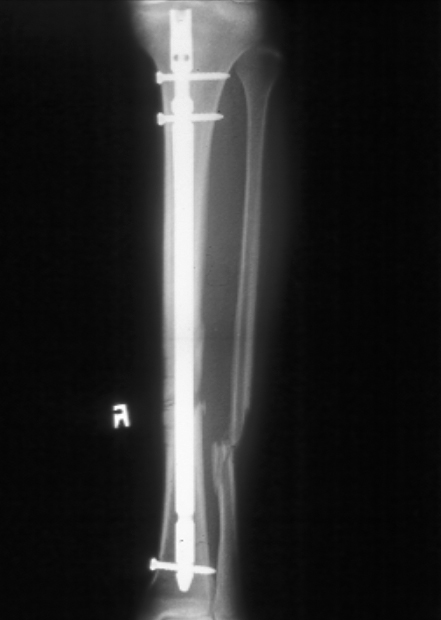
Michael Reiswig, one of the surgeons responsible for the historic change gave his take: “It really was pretty intuitive.  Carpal tunnel releases were averaging 30 minutes per case, and like 0.7 TWSS’s. I mean, what can you say during a carpal tunnel release, 'looking forward to doing some hand work'? On the other hand, tibial nailings were around 90 minutes and 4.3 TWSS’s per case.  ‘This rod’s too big.’ ‘It won’t fit in the canal.’ ‘Just pound on it a little harder.’ It only made sense that higher compensation should be linked to the cases with more double entendres.” 

The orthopedic oncologists were the one sub-specialty opposed to the move, stating simply that they were 'getting screwed’. 

Saturday, January 11, 2014


Dr. Simes demonstrating the proper technique of leaving the elbow free of webril during prophylactic splinting.

Junior orthopedic resident covers mistake by coining the phrase "prophylactic splinting"


RIVERSIDE, CA - Quick thinking second year junior orthopedic resident Mark Simes attempted to cover a mistake by convincing an attending of the utility of prophylactic splinting. At sign out, Dr. Simes presented the case of 38 year old Blake Sampson who presented acutely intoxicated to the ED with a left both bone forearm fracture. Dr. Simes then presented post reduction films of a splinted and seemingly uninjured right forearm.

When questioned about the apparent mistake, the rapidly adapting Dr. Simes stated: "We knew the left forearm was fractured, that much was clear. Would it displace?  Was it stable? I wanted to evaluate the full nature of injury, which I felt needed to be stressed under physiologic conditions to do so." When questioned about why a splint was placed on the uninjured arm, Simes stated: "In his state of intoxication, who knew what was going to happen to the right arm. I wasn't so much concerned with the fracture that was, I was concerned about the fracture that might be." The attending gave a long sigh and was heard mumbling something about "needing to get to private practice" while the OR control desk called for the patient for his prophylactic forearm ORIF.